

Collaborative Approach Enhances Care for Children with Brain Tumors and NF Worldwide
An international pediatric brain tumor board established by Mohamed Shebl Abdelbaki, MD, WashU Medicine pediatric oncologist and director of the Pediatric Neuro-Oncology Program at Siteman Kids at St. Louis Children’s Hospital, is rapidly becoming a collaborative, global force in efforts to better diagnose and treat children with brain tumors.
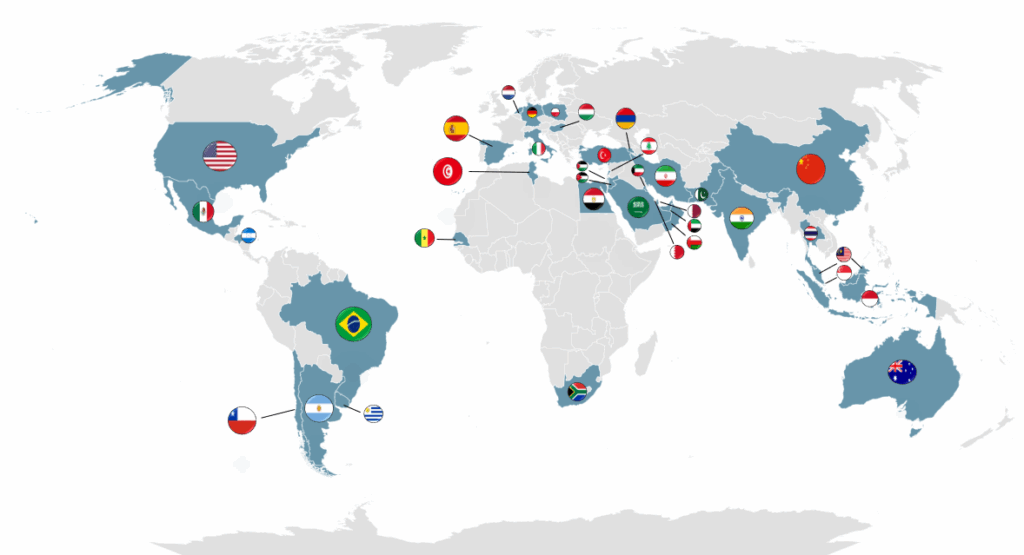
“We regularly have more than 50 physicians participating in each monthly tumor board from around the world,” Abdelbaki said. “That represents more than 65 institutions from 35 countries working together to improve outcomes and care for children and young adults with brain tumors from all over the world.”
Pediatric brain tumors are the second most common cancer diagnosed in children and adolescents, after leukemia. There are more than 100 distinct types of primary brain tumors. However, Abdelbaki noted, “They might be common, but there are not enough experts around the country and the world to care for children with these cancers. Significantly, the survivor gap is huge, depending on the country. We need to help children regardless of where they live.”
He started the International Pediatric Brain Tumor Board in 2021. In addition to neuro-oncologists, there are neuropathologists, neuroradiologists, neurosurgeons and others who gather monthly online to discuss how to manage difficult cases. In some instances, discussions also revolve around caring for children with brain tumors in countries with limited resources.
The growing demand and significance of this collaborative network has led to the establishment of a separate quarterly Neurofibromatosis (NF) Board in addition to a distinct separate Polish Pediatric Neuro-Oncology Tumor Board that involves eight cities in Poland. To date, more than 200 cases have been presented in the various international tumor boards that Abdelbaki leads.
“Our reach has extended to all parts of the globe,” Abdelbaki said. “Examples include Egypt, Iran, Italy, the Netherlands, Mexico, Brazil, Australia, India, South Africa and Thailand, in addition to the United States.”
A manuscript about the impact of the worldwide collaboration was published online in the May 30, 2025, edition of the International Journal of Clinical Oncology. (Shatara, Margaret, et al. Collaborative frontiers in pediatric neuro-oncology: establishing an international tumor board for enhanced care and global impact; doi: 10.1007/s10147-025-02793-3)
International Fellowship Training Added
Abdelbaki is also leading efforts to establish a training program in neuro-oncology for physicians from around the world. “I started an international training program in 2022 for physicians from other countries so we can increase the number of specialists who treat children with brain tumors,” he said. “They come to St. Louis to train in pediatric neuro-oncology for three months and we also travel to their countries.” Seven specialists from five countries have been through the program, and four more will participate in the coming year. Most have their training supported through donations from foundations and generous donors.
In May 2025, WashU Medicine and the University of Alabama at Birmingham signed a collaborative agreement with the Children’s Cancer Hospital Egypt 57357 to start a robust collaborative pediatric neuro-oncology fellowship program. The Egyptian hospital is the world’s largest free comprehensive pediatric oncology hospital. “We are working together to train the next generation,” Abdelbaki said.
On the horizon are opportunities for collaborative research in Latin America and elsewhere. Abdelbaki and his Polish colleagues have also published the largest dataset of medulloblastoma patients in Poland.
“My vision is to continue expansion,” Abdelbaki said. “I’d like to add training programs in other specialties that serve brain tumor patients, including neuropathology and radiation oncology. I’d also like to develop a funding mechanism to support pathology services for countries that lack the ability to offer specialty services.”
He added, “It’s been an amazing collaborative learning experience for me to co-manage difficult cases from countries with often-limited resources. We are committed to extending our global reach because children should be able to receive the best care, no matter where they live.”
To learn more about the Pediatric Brain Tumor Program at Siteman Kids, click here.